Saturday, September 20, 2014

A Growing Love, Or Obsession

When I started college, I was a History major and English minor. I then switched to a double major in History and English, but I graduated with an English major and History minor. I had no concerns about English Senior Seminar when I started college because I wasn't an English major, and minors didn't have to do Senior Sem. By the time I was an English major, I was determined that no matter what I would do my Senior Sem presentation and paper on Tolkien. But before any of that even happened I was already writing papers on Tolkien.

Every English major and minor has to take Intro to English. This is where you get grammar and literary theory. Let me tell you, I hate literary theory. I just don't like it. One of the first things our professor made us do was write a paper on one of several topics so that she could get an understanding of our writing abilities at that point. One of the topics was Write About Your Favorite Author. Guess what topic I chose? And guess which author I picked? If you guessed Tolkien, you'd be right. I still have the paper and what follows is an excerpt. It's clearly not my best writing but I'm going to share some of it anyways so you can have something to compare my Senior Sem excerpt to.

"Each land has a voice of its own. The Shire is peaceful and naive. The realms of Rivendell and Lothlorien are the last havens of the Elves. Rohan is a hardworking country while Gondor is more warlike. The forests are ancient and angry, existing in a dreamlike state. And Mordor is bleak, possessed by and producing evil. The people and creatures are equally amazing. The different races each have their own personalities that clearly define them. The elves are majestic and peaceful, yet at times they can be ruthless. The orcs are pure evil, created by evil and living only to serve it. Men are proud and arrogant, but willing to try to redeem themselves. Dwarves are stubborn and competitive, always wanting to prove themselves. And hobbits are like children, innocent and pure."

Part of what bothered me about Tolkien's writings not being considered literary is that he's created this completely realistic world, full of real people and places. It's not something that he sat down one weekend and wrote. It was the product of many years of writing and study, and the end result is magnificent. How can you claim such a work does not have literary merit? 

It wasn't until after my freshman year of college that I tried reading The Hobbit again. And this time I finished it. I actually really like it. It's so easy to read that I can't fathom what my problem was when I tried to read it the first time. I've even read it a couple times since then, mainly to prepare myself before the movies came out. 

My next couple years of college passed with no real thought about Senior Sem and what I would focus my presentation on. It's an unstated rule that all English majors attend a Senior Sem presentation before they start Senior Sem. This way they have some idea what they're getting into beforehand. I had attended a couple my freshman year. The first presentation I saw was on Harry Potter. A couple people that year focused their presentations on Harry Potter and after that the series was banned from being used in Senior Sem. It's another series that I love and think has literary merit but because it's popular and written for "children", it's considered unworthy. 

The summer before my senior year, I started doing research on Tolkien and his works. I needed something that I could use to justify doing my presentation on Tolkien. That is when I discovered mythopoeia and my topic was born. Since we had to have more than one work, and at least one had to be from an upper-level class, the other works I picked were Odyssey by Homer and The Four Zoas by William Blake. I used Homer as a basis for what canon mythology was and Blake as an example of created mythology that is considered worthwhile. I needed to establish what mythology was before I could prove that Tolkien's works should be considered mythopoeic (created mythology). To further my point, I focused on The Silmarillion. First, it's a single book and therefore shorter than The Lord of the Rings. Second, it's an outline of how Middle Earth was created and where the people came from. It's one very long creation story, one of the oldest kinds of mythology. During my research on The Silmarillion I stumbled upon something very exciting: there were bands who had written songs/albums based off the book. In particular, Blind Guardian has an album called Nightfall in Middle-Earth that I bought and listened to throughout my semester of Senior Sem. I still listen to it frequently. It's wonderful and I recommend it if you don't mind power metal. 

Finding music based off The Silmarillion was easy. Finding articles on the novel, The Four Zoas, or mythopoeia was not so easy. It was really difficult to find anything on those 3 topics. Homer is popular so articles about him and his writings are abundant. Even finding articles on LOTR was easy but as I wasn't using it for my presentation those articles were pointless. Eventually though I found enough articles for all of my sources. Some of them I actually really enjoyed and still have copies of. And I found an article with one of the most interesting titles ever: "An Imitation of Oysters: C.S. Lewis and the Myth in Mythopoeia". Once I had all of my articles I was ready to start writing my paper and creating my presentation. End result: 20 page paper and 30 minute presentation. What follows is two excerpts from my final paper. The first deals with the concept of the fall in mythology and one of the places where it is found in The Silmarillion. The second deals with a couple cases were Tolkien was influenced by outside sources.

"The fall of the Elves is limited to a line of Elves, specifically the Noldor.  They are the ones who create the Silmarils and then vow to reclaim them at any cost.  The Silmarils increased the “Noldor’s pride, but also their sorrow, a Fall that took them into destruction, and with them all those that became involved in one way or another with the Silmarils” (Schweicher 168).  The Silmarils are the bane of the Noldor and almost destroy them, their allies, and all of Middle-earth.  Their fall is by far the most destructive and the farthest reaching."

"The character of Túrin Turambar mirrors the character Kullervo from the Finnish epic The Kalevala.  In his book Tolkien and the Silmarils, Randel Helms describes the relationship between the two men.  Both grow up in the home of a noble relative and both unknowingly sleep with their estranged sister.  When the two discover that they are siblings the sister throws herself over a cliff and the brother falls on his sword.  The story of Túrin also shows aspects of fate and doom, traits common to Germanic literature.  Not only does Túrin’s name “Turambar” means “master of doom” but he is frequently guided by his fate.  He slays his friend Beleg in what seems like an accident but was really the workings of fate.  Fate is also prevalent in the story of Beren and Luthien.  Thingol, Luthien’s father, tells Beren that he may marry Luthien on the condition “that Beren wrench a Silmaril out of the crown of Morgoth and bring it back” (Whitt).  Thingol’s desire for a Silmaril dooms himself and all his people, and involves them in the Doom of Mandos that is upon the Noldor for their kinslaying."

Although I loved spending four months studying Tolkien and his works, I was happy when the semester was finally over. Senior Sem is very stressful and I was so ready for it to be over by the end. It was wonderful to do a presentation on Tolkien and show people that his works are more than what they seem and that they are worth more than people think. And I've certainly gained something from the experience. I have discovered two different societies based on Tolkien and mythopoeia, both which I fully intend to join. I've discovered a CD that combines my love of Tolkien with my love of music. I've discovered the art of Ted Nasmith, who illustrated The Silmarillion, and I found a copy of the book with his art which I was forced to buy. And I've become even more of a fount of useless knowledge when it comes to Tolkien, but I enjoy it so it's ok.

Wednesday, September 17, 2014

Entranced by Tolkien

I cannot remember a time when I did not love to read. Most people can pick out a book that changed their outlook on reading; they can say "This book made me love reading". I can't say that. I'm absolutely certain that I was born with an innate love of reading. It's part of my DNA. It's just who I am. But, there is still a series that majorly influenced the way I look at literature and  reading.

I was 9 years old when The Lord of the Rings: The Fellowship of the Ring was released in theaters. I can remember going to see the movie and my mom covering my eyes when Galadriel almost takes the ring from Frodo. I'm not sure why she thought that would scare me when I had been watching Star Wars and Jurassic Park since I was 3. But I digress. Somewhere around this time is when I also began reading the books. Since I was still a little young, my parents thought I should start with The Hobbit, that it would be easier for me to read than The Lord of the Rings. It was a nice theory but it didn't work so well. I got bored about the time the dwarves started singing as they washed the dishes. So I stopped reading The Hobbit and instead spent at least the next year struggling through The Lord of the Rings. What 9 year old thinks The Hobbit is hard to read but The Lord of the Rings is easy? Clearly, I have issues.

Part of the reason I struggled with LOTR at first is because Tolkien uses a lot of detail. A lot. At the time, I had a difficult time reading just detail and only a little bit of dialogue. But I persevered and finished the series. And it became my favorite. Well, along with Harry Potter, as I devoured that series as the books came out. I probably read LOTR a couple more times between then and my senior year of high school. During high school I also read The Silmarillion and started The Unfinished Tales, which ironically enough I'm not sure I ever finished.

The big eye-opening moment came when I was a senior in high school. I was taking AP Literature and one of our projects/presentations required us to chose a book and do a report on it. Basic high school assignment. I believe we were given a list of books and told to pick one of those, or check with our teacher if we had another book in mind. When I heard about the project I immediately knew that I wanted to do it on LOTR. I approached my teacher and asked her if I could. I'll never forget her response. Basically, she said "No, because it's escapist literature". Welcome to the literary canon, where scholars you don't know decide what books are worthy of being taught. I had a whole argument planned to convince her to let me do LOTR but I was so shocked by her answer that I conceded.

"Escapist literature": basically, books that you read to escape from real life or read for fun. So anything that isn't escapist literature is boring and forced upon us? One problem: I enjoyed all except maybe 3 books that we had to read in high school. I read Pride & Prejudice, Jane Eyre, and Wuthering Heights way before anyone was ever required to read them. I read those books because I wanted to, because I enjoyed them. Does that make them escapist literature? Does that mean they shouldn't be a part of the literary canon? These are the issues I have with the literary canon. I don't agree with how it is decided that a book is worthy of joining the canon. I understand that during this time Harry Potter was huge and people still saw it mostly as young adult or children's fiction. But there is so much in those books that is more than what it seems. And LOTR is the same way, if not more so. Just because a book is popular and is made into a movie does not mean that it's unworthy of being considered canon literature.

And thus was my soapbox born. This is the issue that would bother me through my last year of high school and through my years as an English major in college. I was determined, however, to change the popular opinion somehow. And I like to think I did, at least a little.

Monday, September 8, 2014

Gone Girl

MAJOR SPOILERS!!!!! Seriously, do not keep reading if you have any intention of someday soon reading Gone Girl or seeing the movie. If spoilers don't bother you then feel free to read on. Let me start by saying that Gillian Flynn is a great writer. I'm 99% sure that Gone Girl is the first book I've read where I do not like a single character in the novel. Not one. All the characters suck and are terrible people. That being said, it was a seriously incredible, mind-boggling book. It is definitely worth reading, no matter how terrible the characters act.


The scene. It's Nick and Amy's five year wedding anniversary. Nick comes home from work (he owns a bar with his twin sister) to find Amy gone. There are signs of a struggle in the living room and there is a present in their closet for Nick from Amy. The police naturally somewhat suspect Nick, although he keeps denying that he killed his wife. It was tradition for Amy to create a treasure hunt for Nick on their anniversary, and the present is the first step. He follows the clues, hoping for some hint about what happened to Amy.

I knew going into the novel that it was one of two things: either Nick really did kill Amy, or she faked her death for some reason. The answer: she faked her death. The reason: she's bloody crazy. Ok, that's not the only reason but she is absolutely crazy. Everyone is whack. Amy discovered over a year before the novel begins that Nick was having an affair with a former student of his (he's a college professor). Amy is naturally upset by this discovery but instead of confronting her husband, she decides she's going to ruin his life. She starts meticulously planning every little detail, intent on framing Nick for her "murder".

Let me back up a little. Amy's parents are psychologists, as is Amy. Her parents wrote a series of highly successful children's books called Amazing Amy, based off their daughter but a more perfect version. Amy is very detail-oriented and creates elaborate plans. She made it look like a friend tried to kill her because she wanted to replace Amy, all because her friend was better than her at some things. She made it look like a boyfriend raped her when she discovered he was cheating on her. Amy would physically injure herself to implicate others. The cases against her boyfriend and friend were solid and there was no question that Amy was telling the truth, except she wasn't.

And now this woman has discovered her husband is having an affair. Nick talks to Amy's former boyfriend and friend for insight into Amy's past, and her friend sums it up perfectly.
"Friends see most of each other's flaws. Spouses see every awful last bit. If she punished a friend of a few months by throwing herself down a flight of stairs, what would she do to a man who was dumb enough to marry her?"
What she does is write a fake diary, pretending that she fears her husband may kill her. She leaves clues that throw Nick's innocence into question. She thinks of every minute detail and has a plan to cover it. This is a new level of crazy. And when Amy accepts help from her high school boyfriend who is obsessed with her and kidnaps her, she kills him. She literally gets away with murder, although not the murder she intended.

Nick is not much better. Amy's clues seem sweet on the surface and Nick finds himself falling for them, and by extension, for Amy. Their relationship is very twisted. They were not honest with each other when they first met and when they showed their true selves, they didn't like each other. Their marriage was more or less based on lies. Once Nick realizes that Amy is actually still alive and trying to frame him for her murder, he starts pleading with her through interviews, begging her to come home. He wants to show everyone who she truly is and have her arrested for what she's done. But when she comes home, she spins a convincing story of kidnapping, rape, and murder done in self-defense. There is no way to prove that Nick's theory is true, or that Amy's story is false. Once again, she has thought of everything.

How does the story end? Nick can't prove anything, no matter how hard he tries. And eventually he has to give up because Amy has found a way to keep him around: she gets pregnant. They will always second guess each other and never fully trust the other, but they stay together. Their marriage is completely toxic and will probably destroy them both and their child.

You can see why I don't like any of the characters. Nick and Amy are both seriously messed up. They constantly present a facade to the world and each other. Amy is willing to go so far as actually killing herself to help prove that Nick is a murderer and receive the death sentence. She throws herself down stairs, poisons herself, cuts herself. She does a whole slew of insane things throughout her life to prove that others have hurt her. Nick is terrified of becoming his father, a man who hates women. He is also a mama's boy and very close with his twin sister. Once Amy disappears, he starts having vivid daydreams of her bleeding, struggling, and begging for help. He envisions killing her when he realizes Amy is framing him. He actually tries to once she comes back, before realizing that Amy was right: they are perfect for each other and could not survive married to anyone else. Nick is also very standoffish. He doesn't always act the way a grieving husband is expected to, and he is frequently described as having a "killer" smile. Not exactly helpful in convincing people he's innocent.

You may be wondering how someone could even like a novel with such despicable characters. Well, the story's very well written. It's hard to put down; once you start it you don't want to stop. There are several twists and turns that keep you guessing. It's actually a really good book and fun to read, as you try to figure out what really happened. I'm very excited to see the movie, which comes out October 3. I'm interested to see how Rosamund Pike plays Amy and I think Ben Affleck will be good as Nick. I would definitely recommend reading the book before seeing the movie. Either way, I hope you have as much fun figuring everything out and being completely frustrated with the characters as I did.              

Saturday, August 9, 2014

The Storyteller

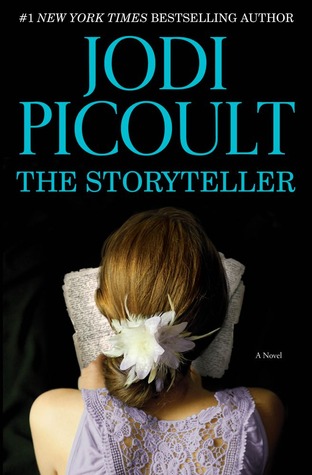
I started college as a History major and English minor, switched to a double major, and graduated as an English major and History minor. I love reading (clearly, hence the blog) and I love history. What I discovered though is that I don't like political or economic or even really military history (although learning about wars was always one of my favorite things). No, the history I really love to learn about is people; how they lived, how they acted, how their life was different than mine is today. "History isn't about dates and places and wars. It's about the people who fill the spaces between them." (Pg 373) And in school, even college, you don't get a lot of that kind of history. So instead I turned to books, not only for my own enjoyment but also to learn. I read quite a bit of historical fiction and it's allowed me to learn about different times and people without having to also learn about politics and economics. And yes, it's fiction and not everything is 100% true but a good author does their research and I have learned things from books that we were taught in class. I did a review of The Book Thief, which deals with WWII but from the point of a young German girl. It was different from your average book about that time and absolutely incredible. I just finished another book about the Holocaust, although this one is set in modern times. Jodi Picoult's The Storyteller is about a man in his 90s who was an SS officer and wants a friend of his to kill him. It's powerful, graphic, and surprising. And it's beautiful.


SPOILERS!
Little bit of plot. Sage is a baker in her early 20s who has a scar on her face and is having an affair with a married man. Josef confesses to her that he was an SS officer named Reiner Hartmann and asks her to forgive and then kill him, since she is Jewish by birth though not by practice. Leo works for the office of Human Rights and Special Prosecutions and he is trying to help Sage prove that Josef is who he says he is. Minka is Sage's grandmother who is a Holocaust survivor and was at Auschwitz. And interspersed through their POVs is a story about a young girl who falls in love with a vampire who killed her father.

The book is split into three parts. Part I is Sage learning about Josef's past and getting in contact with Leo. Part II is Minka's account of her experience during the war. Part III is how everything ends. The whole book deals with the issue of good and evil, right and wrong, black and white. Can Sage kill Josef if he asks her to? What will that do to her? How can she live with that? Is it enough knowing that he killed or participated in the death of thousands of Jews? There's no answer. You can't answer questions like those. The whole situation is too personal, too fresh, too fragile. The questions asked in the book are the same ones that historians and people have been asking since the Holocaust happened. And Picoult's answers are interesting.

"Did I know this brutality was wrong? Even that first time, when my brother was the victim? I have asked myself a thousand times, and the answer is always the same: of course. That day was the hardest, because i could have said no. Every time after that, it became easier, because if I didn't do it again, I would be reminded of that first time I did not say no. Repeat the same action over and over again, and eventually it will feel right. Eventually, there isn't any guilt." (Pg 120 Josef)

"I did not think about what I was doing. How could I? To be stripped naked, shouted at to move faster and faster toward the pit with your children running beside you. To look down and see your friends and your relatives, dying an instant before you. To take your place between the twitching limbs of the wounded, and wait for your moment. To feel the blast of the bullet, and then the heaviness of a stranger falling on top of you. To think like this was to think that we were killing other humans, and to us, they could not be humans. Because then what did that say about us?" (Pg 156 Josef)

"Inside each of us is a monster; inside each of us is a saint. The real question is which one we nurture the most, which one will smite the other." (Pg 111 Josef)

Sage hears both Josef's side and Minka's. She hears from the predator and the prey, the victim and the attacker. It makes things hard for her, to reconcile this old man who everyone in the community loves with a cold-blooded killer who murdered innocent people. Especially since Josef and Minka crossed paths in Auschwitz. Minka worked as a secretary for Josef's brother, who was also an SS officer. Franz was not as brutal and violent as Josef, although he could be if the occasion called for it. Minka started working for him after the story she was writing was discovered. Her story is the one interspersed throughout the book. Although it deals with supernatural creatures, it's a clear allusion to the situation between the Germans and Jews, and the undeserved prejudice for something that is not the fault of the Jews. Minka's story kept her alive for a time, the way Scheherazade used her storytelling to stay alive. In the end, Franz is not able to hear the rest of her story and neither is Sage as Minka left it unfinished, leaving the ending up to the reader.

When Picoult explained Minka's reasoning in leaving her story unfinished I was afraid that meant the book would not have a solid ending. But it does. Sage manages to get proof that Josef was who he said he was and Leo is going to arrest him. But Sage goes through with killing Josef. She doesn't forgive him but she wants to keep the promise she made, even if it means she has to kill someone. That's not the end though. When Josef was an SS solider he had had his blood type tattooed to his arm in case he ever needed blood. He removed the tattoo but his SS records still listed his blood type. When Josef tries to kill himself because he believes Sage won't kill him, he receives a wristband at the hospital with his blood type. And when Sage and Leo arrive at Josef's house to arrest him after Sage has killed him, she sees the wristband and realizes that Josef was not Reiner Hartmann. He was Franz Hartmann, the scholarly brother who was so enthralled by Minka's story and not as terrible as his brother, but who in the end watched his brother die and did nothing to save him.

I don't remember when it was, but there was a moment when I thought that maybe Josef was Franz and not Reiner. I dismissed the thought but it turns out I was right. I wasn't exactly expecting it. It certainly explains how Josef was able to pass himself off as Reiner so successfully; as Reiner's brother he would have known about the things Reiner had done. But still, poor Sage. You can't exactly say she killed an innocent man, but she didn't kill the man she expected. And even after all those years, Franz still had the original copy of Minka's story and was still trying to figure out the ending.

I loved it. Even with the plot twist and the dark subject matter. Yes, there were lighthearted moments. Leo mentions that people know when someone was a Nazi because "he's got a European accent and wears a long leather coat and has a German shepherd." But Picoult was also not sparse on the account of Auschwitz and the treatment of the Jews. The novel is graphic, it's dark, and it can be hard to read. It's so hard to imagine that these things really happened, that humans treated other humans like that. But it's also captivating and beautifully written. You want to know what happens next, both to Minka and Sage. You know Minka survives, but how? And you hope that Sage realizes she's worth more than being the other woman, which she finds through Leo. And while there is still no answer to the difficult questions presented in the book, Picoult manages to give different interpretations that leave you thinking long after the book is finished.

Monday, July 28, 2014

The Little Friend

SPOILERS. A few months ago, my mom read Donna Tartt's The Goldfinch. She raved about the book and how much she loved it, and shortly after she read Tartt's The Little Friend. She kept telling me that I needed to read both the books and I finally read The Little Friend. What a book! It's one of those books that makes you think and question. It's a long book but so worth the read.


First, I want to talk about Tartt's style of writing. Let me start by mentioning that the book is 555 pages long but has only 7 chapters and a prologue. That makes for seriously long chapters sometimes. On top of that, the perspective jumps from character to character. I actually liked that in this case, though, as there are so many characters and so much happening all at once. It allowed you to see across the board and get to know all of the characters, which is important as the story goes along. I had a little trouble getting used to her writing at first, as some of the sentences were a little disjointed. Also, several of the characters either daydream a lot or get lost in memory, and sometimes you're not sure what is a dream and what is actually happening.

So, what is the story all about? Well, Harriet's brother, Robin, was lynched when he was 9 and she was only a baby. Her sister, Allison, was 4 at the time and outside when it happened but can't remember anything. Robin's death totally destroyed their mother and changed the whole family forever. The story takes place when Harriet is 12 and she desperately wants to know who killed her brother. She starts investigating and gets it into her head that Danny Ratliff, a somewhat friend of Robin's, is the person behind the murder. This sets off the whole story and gets Harriet into a world of trouble.

Harriet tries to get answers out of her sister, Allison, and her grandmother and 3 great-aunts. No one wants to talk about Robin's death, as everyone loved him. His memory has been completely immortalized by the family but they don't like to talk about his death. Once Harriet decides that Danny Ratliff killed Robin, she starts following him with the help of her friend Hely, whose older brother was also a friend of Robin's. And this is where things start to get interesting. It's hard to explain everything that happens in a 555 page novel in only a few paragraphs so I'm only going to touch upon a few things.


The Ratliffs. My goodness does this family need serious help. All of the sons have been in jail, except the youngest who is retarded. The family is basically white trash so they're looked down upon without adding the jail time to the situation. And the grandmother is absolutely crazy. She's mean in a conniving way and eggs her grandsons on, causing fights all the time. Plus, she is constantly "sick and dying" but never actually dies. Farish is literally crazy and was actually institutionalized at one point. He cooks meth, and uses it a little too often, and is beyond paranoid about everything. Eugene is crazy religious and for a time hangs out with a preacher who handles snakes, which plays a major part later on. And Danny is stuck in this family and wants out but can't leave. You believe, like Harriet, that he probably killed Robin. You want him to get caught and get what he deserves. But then you start to know him and realize he actually was friends with Robin and was very upset by his death. But his family beat that out of him and he bragged about killing Robin. In the end, you pity Danny. He's not perfect, but you also don't want Harriet to succeed in killing him.

Which is her plan all along. Harriet wants to kill Danny because she thinks he killed Robin and she wants revenge for the brother she never knew. Although she's the "main character" it doesn't take long to realize that Harriet isn't all right either. Really, no one in the whole novel is. Harriet has no proof that Danny killed Robin but she is adamant that he did and goes to great lengths to kill him. She breaks into Eugene's apartment to steal one of the visiting preacher's snakes, which she and Hely then throw over an overpass onto Danny's Trans Am as it drives by. However, Danny's grandmother is the one driving the car and almost dies. Life lesson: when driving under an overpass in a convertible, beware of falling snakes. Harriet then decides to shoot Danny, which doesn't happen. Instead, he almost drowns her in a water tower, where paranoid Farish had hidden his meth. Harriet manages to escape but Danny, who can't swim, ends up in the water tower. He survives for 2 days, before being rescued and admitting to killing Farish, who he'd shot because Farish was really starting to lose it and Danny wanted to get away.

In the end, Danny is on his way back to prison and Farish is dead. Hely still believes the sun shines upon Harriet and her every deed. And no one suspects Harriet of anything, except epilepsy. The story ends with her in the hospital after having a seizure when she returned home from the water tower incident. The doctors believe she has epilepsy and that's it for her. It's a way to explain away her reaction to the water tower incident, her vomiting and blackout. She almost gets away with murder, expect Danny actually survives and she also begins to realize that Danny and Robin were actually friends and that Danny didn't kill Robin.

Some people don't like the ending. They think that Harriet's epilepsy is a cop out. However, I do think there's something wrong with her because she more than any character had vivid daydreams and seemed to zone out and go into her own world. It seems that Harriet, her sister, and her mother all have a loose grip on reality sometimes. I don't know if Harriet actually has epilepsy but I think there are problems. The other problem people have with the ending is that Robin's killer is never revealed. Honestly, I went into the book expecting that we would never know who killed Robin. How could we? It's been 12 years since his death and no one ever had any clue who did it, so how is a 12 year old girl supposed to figure it out? I think the open ending is part of what makes the book so good and what keeps you thinking about it after you've finished it.

And it really is a good book. It touches upon class issues, between blacks, whites and white trash. It shows you how dark life can really be and how easy it can be to get mixed up in something very dangerous. And while it's a little slow at first, once things start happening they just happen all at once. It's not an easy read, in that the subject material is not always pleasant and the issues throughout the novel are not happy. Death, lynching, murder, drugs, abuse. The novel is dark. But it still captures your attention and doesn't let go.

Saturday, April 19, 2014

The Book Thief

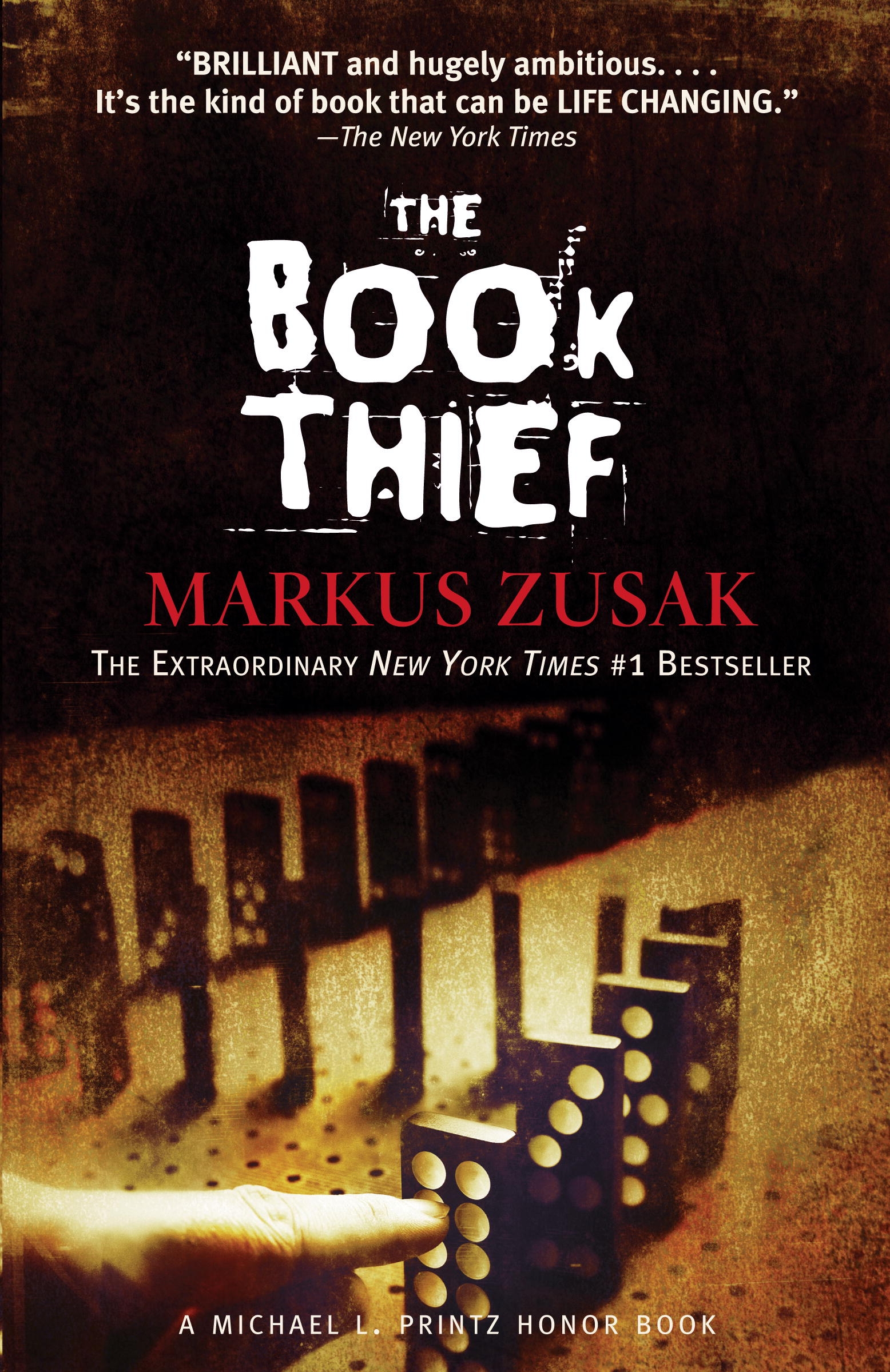
I've always loved learning about the World Wars. I'm not sure why I find them so fascinating but I do. So naturally, I enjoy reading books set during the wars. I recently read The Book Thief by Markus Zusak and it was incredible. I cried, I laughed, I loved it.


The first thing you need to know about the book is that it's narrated by Death. And he's actually quite funny and personable. He's also very blunt, stating outright that everyone dies eventually. You might think Death would be a depressing narrator but he's not. And if you think about it, death is one of the only guarantees we have in our life. It's only natural that he would be honest. Death tends to jump around in his narration, talking about things out of order. This means that there are spoilers in the book and instead of preparing you for what's to come, they seem to make it worse when you finally get there.

The book takes place in Germany, from 1939 to the end of the war. Liesel is a young girl who is taken to live with Hans and Rosa Hubermann, who are to be her new parents. She becomes friends with the neighbor boy, Rudy Stiener, who has a major crush on her and is always asking for a kiss. The Hubermanns eventually hide a Jew, a young man named Max. He and Liesel become very good friends and she is very upset when he chooses to leave. Liesel is the book thief the title refers to; she steals books and together she and Hans read them. I can't really get into more detail because this is a book that should be read and not spoiled. There is so much and it's so powerful.

The way Zusak writes is so interesting. Each part of the book is titled based on the book that is featured in that section. You can gather from the title of the book that books are important to the storyline. The part titles are The Grave Digger's Handbook, The Shoulder Shrug, Mein Kampf, The Standover Man, The Whistler, The Dream Carrier, The Complete Duden Dictionary and Thesaurus, The Word Shaker, The Last Human Stranger, and The Book Thief.  The book titles are important to what happens in that part. Sometimes you don't realize the significance until the part is over. Zusak also introduces the chapter titles by writing "featuring" and then listing a series of events or topics that are covered in the section. It's very different from your normal novel, which is what makes it so interesting. Throughout the book, Death interjects with little fun facts or pieces of conversation, written in bold and set apart from the rest of the text. In the part The Complete Duden Dictionary and Thesaurus, the interjections are definitions of different words that are important to the story. The parts The Standover Man and The Word Shaker are actually about books that Max writes for Liesel, and The Book Thief is about the book that Liesel writes about her life. Zusak completely wrote the two stories and included them in the novel, complete with illustrations.

A page from The Word Shaker

I won't lie, the book is sad. It's heartbreaking and will make you cry. But it's absolutely beautiful. It's so different from your typical novel about the World Wars. It's through the eyes of Death, who is telling the story through the eyes of a child. And it's about Germans, who are the "bad guys". But Zusak makes these Germans human, capable of pity and understanding. It's a seriously incredible book. One reviewer said "It's the kind of book that can be life changing" and I agree. It's a powerful book about people and the choices they are faced with. As Death says:
"I wanted to tell the book thief many things, about beauty and brutality. But what could I tell her about those things that she didn't already know? I wanted to explain that I am constantly overestimating and underestimating the human race - that rarely do I ever simply estimate it. I wanted to ask her how the same thing could be so ugly and so glorious, and its words so damning and brilliant."

As you probably know, last year The Book Thief was made into a movie. I recently saw the movie, and you can find my thoughts on it here:http://moviegeek92.blogspot.com/2014/04/words-are-life.html

Monday, April 14, 2014

Deerskin

I'm in the English honor society at my school, Sigma Tau Delta (STD and yes, we joke about that). We had a book sale on Saturday, and as you can imagine, the members were some of the first people grabbing books. I was hoping to find something interesting and I certainly did. I was emptying a box and saw Deerskin by Robin McKinley. I immediately grabbed it. I'd been wanting to read it for a while now but the library doesn't have it. So you can imagine how excited I was when I found it.


There is an author's note in the front of the book:
"There is a story by Charles Perrault called Donkeyskin which, because of its subject matter, is often not included in collections of Perrault's fairy tales. Or, if it does appear, it does so in a bowdlerized state. The original Donkeyskin is where Deerskin began." 
And it's quite understandable why the story is not common. It's worse than the original Grimms' fairy tales. One reviewer called the book a fairy tale for adults, which I think is a very accurate description. 

Lissar is the daughter of a handsome king and the most beautiful woman in the seven kingdoms. The people were so enamored of the king and queen that Lissar was fairly neglected. She rarely saw her parents and even her nursemaid was her nursemaid so she could be close to the queen. Then the queen died and people remembered the potential uses of Lissar. She is 15 when her mother dies, and a prince from the sixth kingdom sends her a puppy to help her in her grief. For the next 2 years, Ash is Lissar's closest companion. During these 2 yeas Lissar is trying to decide who she is and who she can be. On her 17 birthday there is a ball in her honor and people realize that she has come to greatly resemble her mother. Including her father, who had promised his wife he would only marry someone as beautiful as she was. He gets the great idea that he's going to marry Lissar four days after her birthday. It gets worse. She locks herself in her room with Ash, refusing to marry her father. On the night they were to be married, her father breaks into her room, almost kills Ash, beats Lissar, and then rapes her. Yep. Definitely a fairy tale for adults.

Lissar and Ash escape the next morning and travel for many days before finding a cabin in the woods. They spend the winter there. Lissar has blocked out any memories of her life before she ran away, which woks until she realizes she's pregnant. The stress and horror cause a miscarriage. She is visited in a dream by the Moonwoman, who takes away her memories and gives her time to heal (you learn later that five years passed during Lissar's dream). Lissar and Ash are also transformed to be unrecognizable; Ash with a longer coat and Lissar with white hair, black eyes, and a white deerskin dress.


Lissar and Ash travel and find themselves, although they don't know it yet, in the country Ash was born in. Lissar gets a job in the kennels, working to save a litter of 6 motherless puppies. She becomes friends with Ossin, the prince who sent her Ash. It isn't until Ossin begs her to attend a ball that she begins to remember who she really is. She's once again horrified and confused. And then at the ball Ossin asks her to marry him. She runs again, taking Ash and the 6 dogs she saved with her. They end up at the cabin again and by the end of winter she realizes she has to return. And she does right as Ossin's sister is about to be married to her father. Lissar and Ash lose their disguises and she reveals the kind of man her father has become. Then she runs again, ashamed of her past, but this time Ossin chases her.
Ossin: "I let you leave me the first time because I thought that was what you wanted - that what you wanted didn't include me."
Lissar: "I do want you. But it does not matter. I am...not whole. I am hurt...in ways you cannot see, and that I cannot explain, even to myself, but only know that they are there, and a part of me, as much as my hand and eyes and breath are a part of me."
Ossin: "I do not believe there is anything so wrong with you. You are fair in my eyes and you lie fair on my heart."

Once again, McKinley has written a wonderful novel. However, I have never despised one of her characters as much as I despise Lissar's parents and the people of their kingdom. McKinley just has a way with words that I love. And it doesn't hurt that Deerskin takes place in the same world as The Blue Sword, which I adore. I loved McKinley's foray into fairy tales for adults. We need fairy tales just as much as children do, and whether she is rewriting existing fairy tales or creating her own, McKinley has a gift for fairy tales.